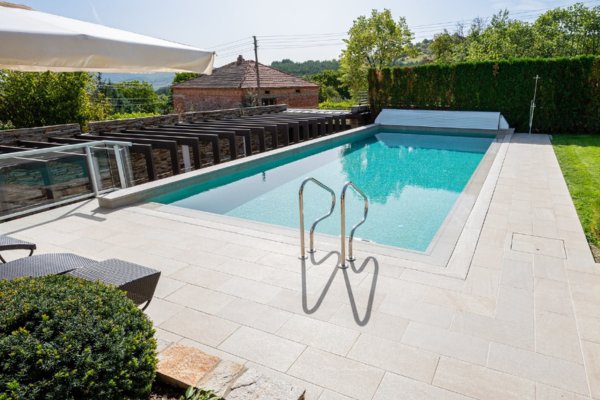
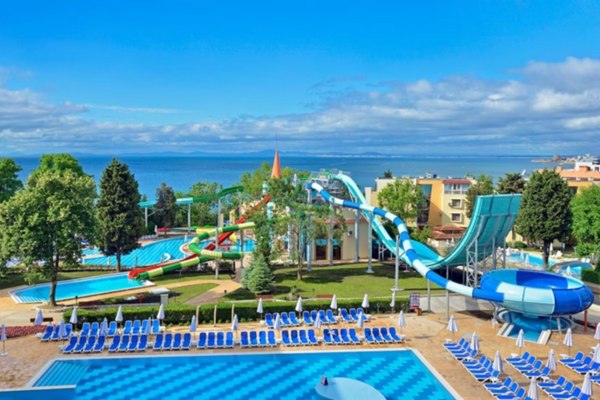
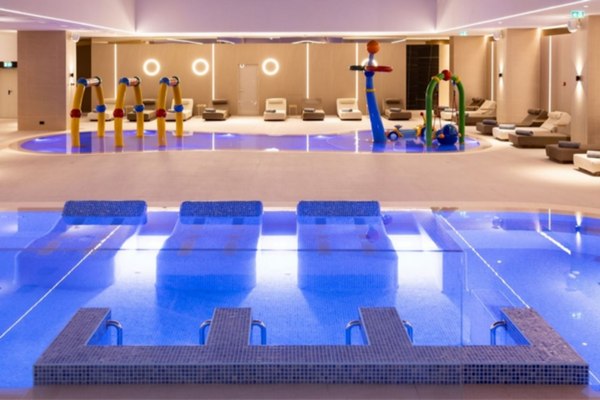
Dreaming of your own swimming pool in the garden? Crystal clear water reflecting the sun's rays, elegant design that blends into the landscape and endless hours of shared time with family and friends... To make this dream a reality, however, choosing the type of pool in terms of material and construction technology is of paramount importance. In the world of pools, building a concrete pool has established itself as the „gold standard“, because this is precisely the solution that offers the highest degree of customisation, unparalleled durability and a feeling of true comfort. Unlike prefabricated solutions, a concrete swimming pool gives absolute freedom – you want an infinity edge that overflows towards the horizon, or perhaps a designated shallow area for the children? An integrated Jacuzzi and swim-up bar…? All of this is entirely possible.

What is a concrete swimming pool?
A concrete swimming pool is a structure whose main load-bearing framework is made of reinforced concrete. Unlike prefabricated pools (with metal walls and a liner) or one-piece shells (made of fibreglass or polyester, which are factory-produced and delivered ready for installation), a concrete pool is built entirely on-site – directly in your garden. This is the classical, most robust and most flexible option from a design perspective. It is a permanent architectural element, an inseparable part of your property's landscape.

How is the structure of a concrete swimming pool built?
The construction of a concrete swimming pool is a complex system that combines structural engineering, hydrodynamics and aesthetics. The main components of this structure include:
- Excavation: The physical excavation of earth, tailored not only to the internal dimensions of the pool, but also to the necessary workspace around it for formwork and installations.
- Reinforced concrete structure: The core of the pool. It consists of a dense network of steel reinforcement (rebar), which is poured over with high-strength waterproof concrete. This guarantees the structure's resistance to the pressure of the earth masses from the outside and the pressure of the water from the inside.
- Waterproofing: Multi-layer system that seals the concrete and prevents water ingress. Concrete in itself is a porous material, which is why waterproofing is a critical step.
- Cladding The visible part of the pool. It has both an aesthetic and a protective function (glass ceramic mosaic, clinker tiles, stone or specialised render).
- Filtration system, ensuring continuous circulation and purification of the water.
- Pipework: The high-pressure PVC pipe network connecting the swimming pool to the technical room. These are usually embedded in the concrete itself before it is poured.
- Additional equipment: All the extras, such as underwater lighting, counter-current systems, waterfalls and other features that are built into the concrete channel.

What shapes and sizes can a concrete pool be?
One of the greatest advantages of reinforced concrete is its plasticity before it “sets”. This means that, in practice, there are virtually no limitations on form or scale. Every project is literally bespoke swimming pool. The most popular configurations include:
- Right-angled with classic, clean design, ideal for swimming and a modern landscape project. Optimal for the installation of automatic covers.
- Oval or round, softening the lines of the garden
- L-shaped as an excellent choice when you want to separate a shallow area for children from a deeper swimming zone, or if your garden has a specific geometry.
- Incorrect, imitating natural pool with curves, rock effects, beach entry, etc.

How is a concrete swimming pool built?
The process of pool construction It is a multi-stage process and requires close coordination between various specialists, including designers, builders, water and sanitation engineers, and electrical engineers. Here are the seven main steps:
-
Design and planning
Before the ground-breaking ceremony takes place, everything must be perfectly planned on paper and using specialised 3D software. During this phase, the following are finalised:
- Sizes and shape, tailored to the size of the garden, urban planning requirements and the client's wishes.
- Depth according to the main purpose – competitive swimming, family use, or diving.
- Positioning in the courtyard For optimal sunlight, protection from the wind and a distance from deciduous trees that might pollute the water.
- Access to the swimming pool – integrated concrete steps, metal staircases or a beach access point.
- Plant room – site selection for the equipment room (underground shaft or above-ground room)
- Plumbing and electrical connections – design of the pipe runs from the pool to the plant room and from there to the main supply of the house.
- Selection of equipment by defining the type of filtration (skimmer or overflow), heating and disinfection.

-
Site clearance and excavation
Following the approval of the project, actual construction activities begin.
- Marking – precise tracing of the pool's contours on the ground.
- Excavation – it is carried out with an excavator, and the excavation is always wider and deeper than the internal dimensions of the future pool in order to accommodate the concrete, reinforcement, drainage, and external insulation.
- Preparation of the base – laying a layer of blinding concrete to level the base and create a clean working surface.
- Drainage as required, if the groundwater level is high, a drainage system is built around the pool in this case to prevent hydrostatic pressure on the future structure.

-
Reinforcement and construction of the structure
This is the stage that ensures your swimming pool will not crack in the event of soil settlement and a possible earthquake.
- Reinforcement – a double grid of reinforcing steel is fabricated for the base and walls. At this stage, all embedded parts (pipes, light niches, drains) are also installed.
- Formwork – formwork (wooden or metal) is being built for the pool walls to hold the concrete in place until it sets.
- Concrete – The casting is carried out using high-quality, watertight concrete (crystallisation additives are also frequently used). Either traditional casting or the „shotcrete” method, which is exceptionally strong, may be used.
- Bottom and walls – It is advisable to pour the concrete in a single pour (all at once) or to use water-stopping strips when the concreting is interrupted, in order to avoid so-called cold joints.
- Structural integrity – after casting, the concrete requires a curing period (usually around 28 days) to achieve maximum strength, during which time it hydrates.
- Finishing works on the structure – sealants, fillers and puttiesat the need to level the concrete )

-
Waterproofing of the concrete swimming pool
Concrete is extremely strong, but its microscopic pores let water through. If the pool is not properly waterproofed, water will penetrate the reinforcement, it will corrode and the structure will be compromised, leading to leaks, peeling tiles and expensive repairs.
Aquatec specialists recommend using two-component, highly elastic cement-based waterproofing systems applied in a minimum of two coats with an embedded fibreglass mesh between them. This ensures that even in the event of micro-cracks in the concrete as a result of temperature variations, the waterproofing layer will remain sound and watertight.
The waterproofing is applied to both the bottom and the walls, as well as around all critical points (embedded parts, corners).
-
Installation of the filtration system
In parallel with or shortly after the construction of the pool shell, the plant room is also equipped with:
- Skimmers or an overflow channel, which skim the upper layer of the water, where most pollutants collect.
- Nozzles, which return the purified water back to the pool.
- Floor drains, ensuring circulation in the lower layers and serving to drain the pool
- Pump and filter, where the pump It draws in the water and passes it through a filter that traps mechanical particles.
- Pipe system, connecting all these elements into one cohesive whole using specialised PVC pipes and valves.

-
Cladding and finishing works
Once the waterproofing has dried completely, the swimming pool should be given its final finish with:
- Tiles or mosaic: Porcelain or clinker tiles are an excellent, extremely modern and very durable option. Glass-ceramic mosaic is another choice, allowing for the tiling of complex curves and the creation of beautiful patterns. Special epoxy grout mixtures are used, which are resistant to the chemicals in the water.
- Other coverings: In some cases, specialised mineral renders (e.g. PebbleTec) or the installation of an internal PVC liner are used.
- Burgundy: Fitting a coping stone around the edge of the pool, which gives a finished look and prevents contaminated water from the yard from entering.
- Pool area: Construction of paving (decking, stamped concrete, slabs), creation of sunbed areas.
-
Testing and commissioning
Before the swimming pool is handed over to the owner, the following final tests are carried out:
- Services check – pipe pressure test;
- Leak testing (hydraulic tests) – the pool is filled and left for a few days to ensure there is no water loss;
- Filter settings – programming the pump timers and calibration of the automatic dosing systems.
- Water treatment – initial shock treatment, pH level balancing and disinfection.

How much does it cost to build a concrete swimming pool?
When considering a project of this kind, the very first question most of our clients ask is what the the price for building a swimming pool. Since we are talking about a custom-made facility, there is no single price that we could provide. The final cost depends on a multitude of factors that are important to take into consideration when planning the investment. If we are to give indicative ranges for the Bulgarian market as of today, the base price of a concrete swimming pool (with standard dimensions, for example, 8x4 metres, a skimmer system, basic mosaic tiling and standard equipment) usually starts from 20,000 to 23,000 euros. Of course, this price for a concrete pool can easily exceed 40,000 – 45,000 euros if you upgrade to an overflow system, complex shapes, luxury finishes, a slatted pool cover, heat pumps, a salt chlorinator and smart automation.

What does the price of a concrete swimming pool depend on?
General costs for a concrete swimming pool are formed by the following key factors:
- Pool dimensions – Fair enough, a larger pool means more excavated soil to haul away, more concrete, steel and human labour.
- Form Rectangular shapes are easier and cheaper to formwork and line than complex curved pools.
- Depth – the deeper pool requires a more massive construction and more materials.
- Terrain complexity – rocky soil, sloping terrain, a high water table or difficult access for heavy machinery can significantly increase the cost of excavation and preparatory work.
- Excavation works – the fees for hauling and disposing of the soil vary by region.
- Quantity of concrete and reinforcement – these raw material prices are on the world exchanges and directly affect the cost price.
- Waterproofing and type of cladding – there is a huge difference in price between budget glass-ceramic tiles, luxury Spanish clinker, natural stone or designer 3D mosaics. Epoxy grout also makes the project more expensive, but it is a recommended investment.
- Filtration system – Overflow pools are more affordable. Overflow pools (with an overflow channel around the perimeter and a balancing tank) are much more attractive, but technologically more complex, which makes them 25–35% more expensive.
- Heating – The inverter heat pump or solar panels are an additional expense, but they extend the season by months.
- Brightening – standard LED floodlights versus smart RGB lighting with Wi-Fi control.
- Bedspread from a solar cover to a full roofing structure – the choice is once again entirely yours
- Headwind – swim-trainer.
- Automation Automatic chemical measuring and dosing stations, salt electrolysis, smartphone control, etc.
- The pool area – The cost of the decking or stone around the pool often represents a significant percentage of the total budget and should not be underestimated.
Advantages of the concrete pool

When considering an investment of this scale, it is important to understand why reinforced concrete remains the leader. The main advantages of a concrete swimming pool with indisputable:
- Custom size and shape
With concrete you have no restrictions from factory moulds. You can design your pool so that it curves around an existing tree in the garden, follows the curves of the house's architecture, or creates a perfect oval. You are the designer.
- Customisable depth option
Do you want a gradual beach entry where the water starts from 0 cm? Do you want an area to place sun loungers directly in the water, and another area, 2 metres deep, for fitness swimming? Concrete allows for a smooth or stepped transition between any depths.
- Freedom of choice of cladding
Unlike a fibreglass pool, whose surface is predefined, a concrete pool is a canvas on which you can create. From glass mosaic tiles to sophisticated grey large-format porcelain tiles, to an imitation of a natural riverbed, the aesthetic possibilities are endless.
- Option for different equipment
Concrete allows the easy and secure embedding of any type of embedded parts. You can have in-wall massage jets, an integrated spa, impressive water curtains emerging directly from the walls, or a hidden compartment for an automatic cover.
- Suitable for complex architectural solutions
For small gardens, steep plots with a significant change in level, non-standard shapes or when wishing to create a specific children's area, concrete is often not just the best, but the only possible option for construction.
- Long-lasting construction with professional execution
If designed and constructed correctly, the lifespan of a reinforced concrete trough is practically eternal. It cannot be cracked by UV rays, it does not scratch like plastic, and it withstands extreme temperature amplitudes and seismic forces better than any alternative.
The disadvantages of a concrete swimming pool
To make your informed choice, you also need to be aware of the challenges, namely:
- A longer building process
While one fibreglass pool can be installed in 1 week, whereas a concrete pool takes months to build (the concrete curing alone takes about 28 days).
- More complex installation
The process involves heavy machinery (excavators, concrete mixers, concrete pumps), prolonged noisy construction activities and the conversion of part of your garden into a building site for a certain period of time.
- Higher initial investment
Custom design, the heavy use of reinforcement and concrete, as well as the large volume of highly skilled manual labour required for the tiling, make a concrete pool more expensive initially. - Need for professional execution
Building a concrete swimming pool is NOT a DIY project. Even a small mistake in calculating the reinforcement statics or missing a step in the waterproofing can lead to fatal and very costly defects to repair. - The importance of proper waterproofing and maintenance
The porous nature of the concrete and the joints between the mosaic tiles can become a breeding ground for algae if the water is not treated properly. Every It may take 2 to 5 years replacing the grouting or partial repair of the tiling, if the grout is cement-based, if it's epoxy – it's not necessary.
- Concrete or polyester swimming pool – which to choose?
Clients often hesitate between these two popular options. Here is a quick comparison:
| Feature | Concrete pool | Polyester pool |
| Shape and size | 100% customised, with no restrictions | Limited to factory models (monoblocks) |
| Build time | 2 to 4 months | 1 to 4 weeks |
| Aesthetics and cladding | Wide selection: mosaic, tiles, stone, 3D effects | Smooth surface, limited colours |
| Durability | 50+ years (possible cosmetic renovation 15 years ago) | 25-30 years |
| Initial price | Higher | Medium (lower than the concrete) |
| Surface maintenance | Requires more attention (grout cleaning) | Very easy (non-porous surface) |
If you are looking for a quick solution and a standard size, fibreglass is great. But if you are looking for luxury and a swimming pool designed specifically for your home and style, then concrete is the definitive winner.
What equipment is needed for a concrete swimming pool?
The equipment is what turns a concrete hole filled with water into a crystal clear, “living” pool. Systems are divided into basic (mandatory) and additional (comfort extras).
Mandatory equipment:
- Filtration system
- Circulation pump, which moves the water.
- Filter (usually sandy), which traps dirt.
- Skimmers and nozzles, ensuring the flow of water to and from the pump.
- Lighting for atmosphere and safety during the dark hours of the day
Recommended and optional equipment:
- Automatic dosing system, which eliminates the need for manual addition of chlorine and acid. The machine automatically monitors the water parameters and doses chemicals in micro-quantities.
- Heating (heat pump)
„Aquatec's specialists recommend investing in inverter heat pump and salt electrolysis system. The heat pump extends the swimming pool season from April to October with minimal electricity consumption, while salt electrolysis generates natural chlorine from salt, making the water silk-soft and gentle on the skin and eyes.“
- Bedspread – solar, winter, or automatic security roller shutter for child safety and heat retention.
- Headwind for active swimmers, creating a powerful jet to swim against on the spot.
How long does it take to build a concrete swimming pool?
The process is slow and methodical. It usually takes between 8 and 12 weeks, but the actual timeframe depends on:
- Project size and complexity – an infinity-style pool on a steep slope will take significantly longer than a standard rectangular pool on level ground.
- Terrain
- Weather conditions – torrential rain or sub-zero temperatures stop concreting and the application of waterproofing.
- Materials and cladding – laying a complex mosaic picture or glass ceramics takes much longer than applying PVC film.
- Equipment – Complex automated systems require more time for installation and calibration.
How do you maintain a concrete swimming pool?
Maintenance is the key to the longevity of the pool and the health of its users.
- Filtration – the pump must run long enough every day to turn over the entire volume of water at least 2-3 times (usually 8-12 hours a day).
- pH control – ideally between 7.2 and 7.6. This protects the eyes from irritation and ensures that the disinfectant works effectively.
- Disinfection – maintaining correct chlorine (or active oxygen) levels to prevent the growth of bacteria and algae.
- Cleaning – regular cleaning of the bottom, walls and water line is an important part of maintenance, and using a pool cleaning robot can significantly ease the process. Learn more in our guide how to clean the swimming pool.
- Equipment maintenance – backwashing the sand filter, cleaning the skimmer and pump baskets.
- Winterisation – draining water below the skippers, blowing out the pipes, installing ice-compensators and chemicals.
- Periodic inspection of the structure and cladding for the prompt removal of minor grout issues.
Frequently asked questions about concrete swimming pools
-
What is the appropriate depth for a concrete swimming pool?
„Aquatec specialists recommend a depth of 1.20 to 1.50 metres for family swimming pools. This depth is sufficient for comfortable swimming for adults, is safe for older children, and is economical in terms of heating and maintaining the water volume. However, if you are planning to install a diving board, you will need a depth of at least 2.40 metres in the diving area.“
-
Is a concrete or fibreglass pool better?
There is no single answer, it depends on priorities. Fibreglass is quicker to install and easy to maintain. Concrete offers unlimited design, a luxurious look and timeless durability.
-
How long does a concrete pool last?
The reinforced concrete structure itself can last over 50-70 years. The cladding (mosaic or tiles) and waterproofing have a lifespan of around 15-20 years, after which cosmetic renovation and re-grouting may be necessary. The equipment (pumps, filters) typically serves reliably for between 7 and 12 years before needing servicing.

Conclusion: when is a concrete pool the right choice?
Building a concrete pool is a serious commitment and a significant financial investment, but the return in quality of life and aesthetics is immense. A concrete pool is the right choice for you if you are not willing to compromise on design. If you have a specific vision, an irregular garden, or want to create a luxurious home resort that fully reflects your individual style – monolithic construction has no alternative.
However, it is important to remember that the perfect result depends entirely on the experience of the contractor. Trust proven experts who will guide you through the entire process from the first sketch to the first dive. Contact the Aquatec team today for a professional consultation and creation of an individual design for your dream swimming pool.